About

Why Tarrow exists

One idea, five reasons, and a promise: no account, no tracking, and the app is a one-time purchase. This page says why Tarrow exists and how it stays clean.

A place is real

Everything is somewhere

However digital our days get, we still live on a physical planet. A tent, a car, a meeting point, a bench, a front door, a hut on a ridge: each one occupies a real point on the Earth's surface.

That point may be

  • hard to describe,
  • invisible from where you stand,
  • surrounded by a thousand things that look the same,
  • unknown to any map, temporary, or meaningful to only two people.

It is still real. Tarrow starts there. It lets one person tell another: this is the exact place. Not who you are, not what you are doing, not which route to take, not which platform you belong to.

Just the place.

A wide valley at golden hour, and one Pin above a bench under a lone tree.

Precision

Not somewhere over there. Exactly there.

People are bad at describing places.

  • Behind the big tree.
  • The third entrance.
  • Somewhere near the tents.
  • Left after the food truck.
  • Where we met last time.

Every one of those depends on memory and interpretation. Coordinates do not. The place already exists; Tarrow only gives you a precise way to point at it, and a precise way to walk to it.

One arrow, one distance.

Hundreds of identical tents at dusk, and one Pin above one of them.

Sharing

A place should be easy to hand over

Telling someone where something is should be a small human act: I'm here. Meet me here. This is the place. It should not need

  • an account,
  • a friends list,
  • a tracking relationship,
  • a map platform,
  • or a permanent digital identity.

So a Tarrow place is a link. The coordinates travel inside it, a name and a note with them. Whoever opens it sees the arrow, on any phone, in ten languages, without installing anything.

And a link can be printed as a code and stuck to a tent pole, a tee marker or a door, where it points the way for years and nobody has to maintain anything.

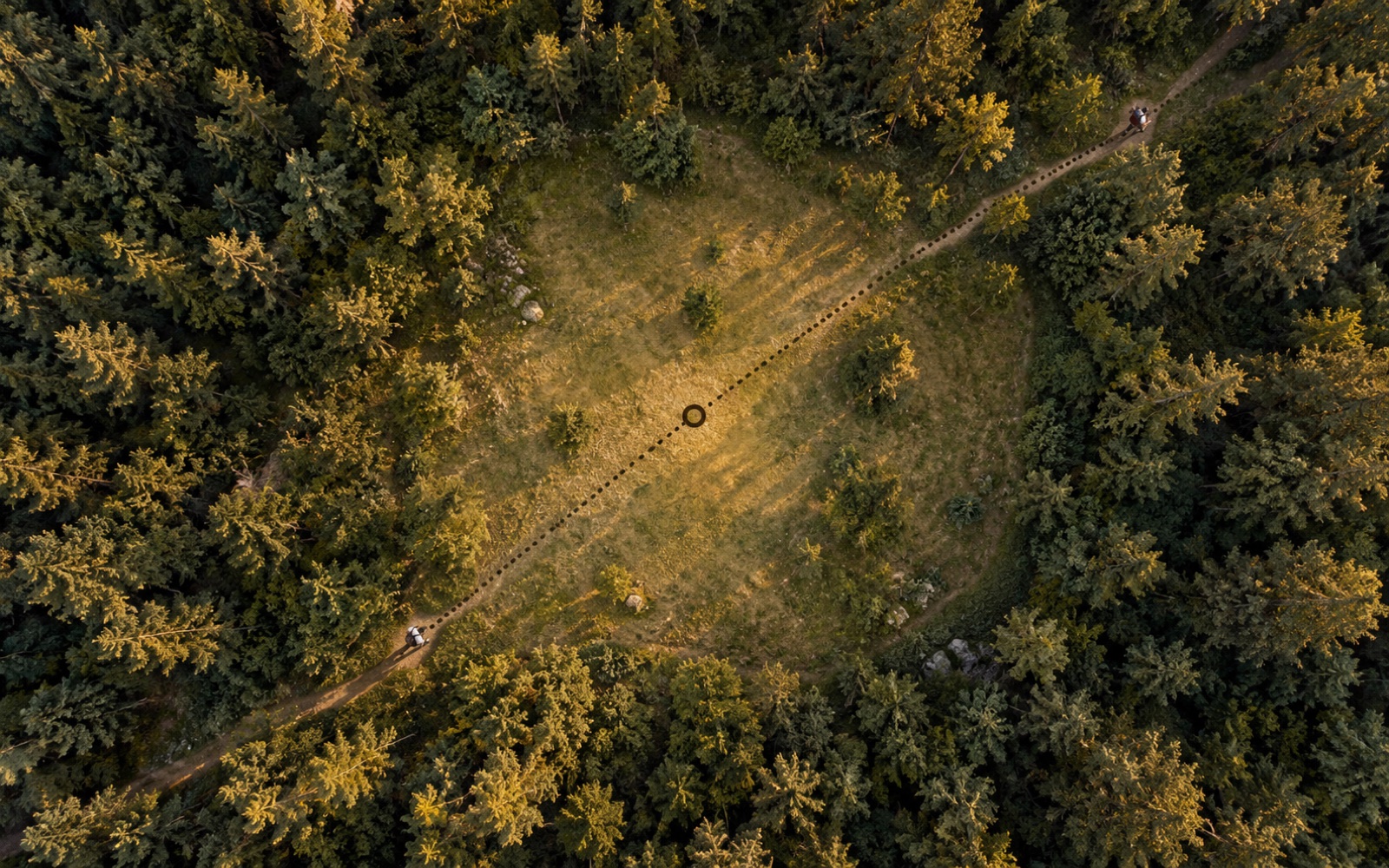
A forest clearing from above; two people walk toward one Pin from opposite sides.

Direction, not instructions

Tarrow gives you the direction. You choose the path.

Navigation as we know it manages the journey: turn left, follow this road, arrive in twelve minutes. Tarrow says one thing. The place is that way, and this far.

Which street, which path across the field, which staircase: that is yours to decide. It is the difference between being guided and being oriented, and it is why the arrow shows the straight line and never a route.

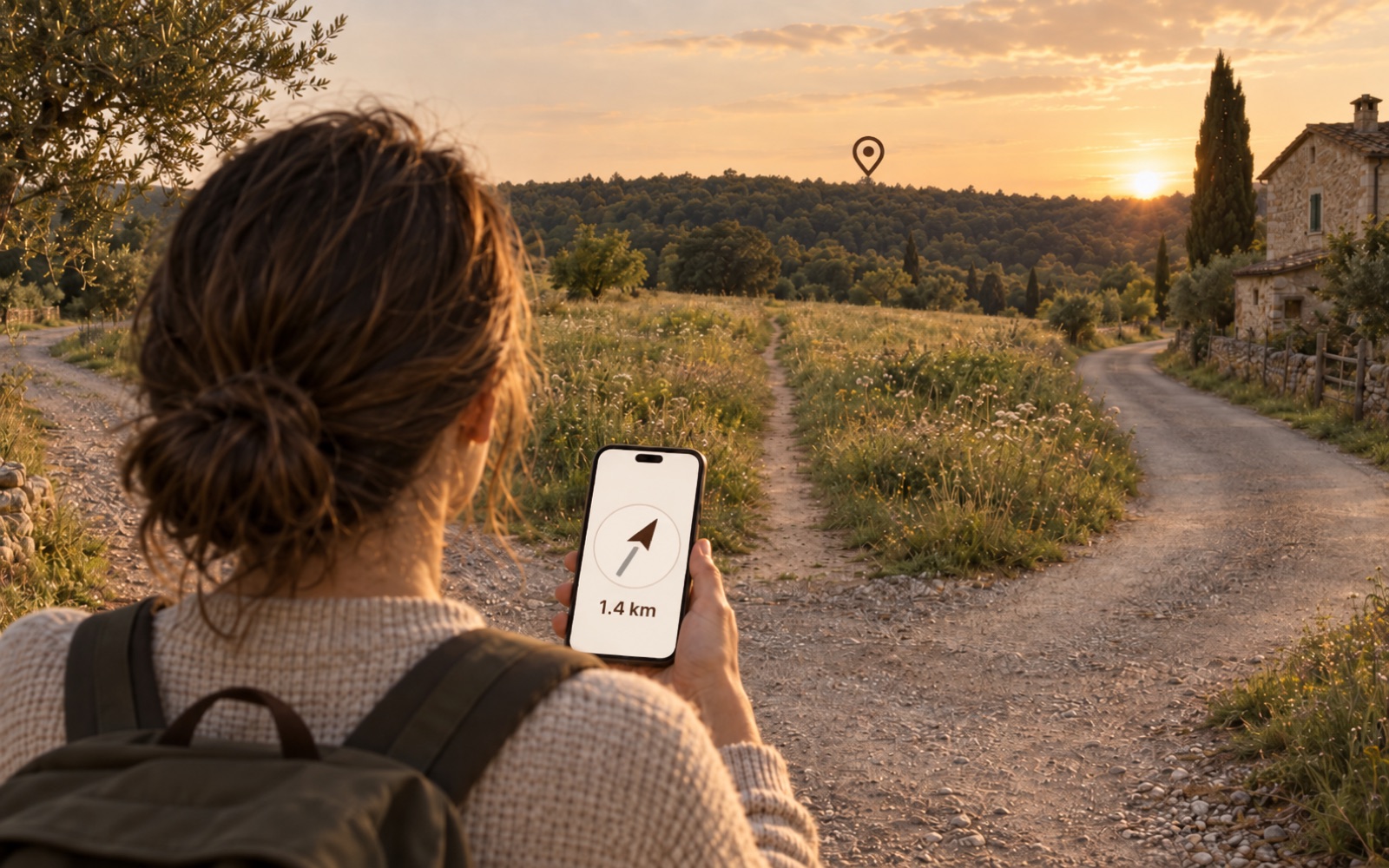
A fork of three paths; the phone's arrow points at a chapel on a hill, no route drawn.

Eyes up

The world, not the screen

The best moment of using Tarrow is not looking at it. Glance, take the direction, look up, walk.

In the app the phone can hand the direction to your hand: turn until it pulses, and it stays quiet while you look at the world. The destination matters more than the interface.

Technology that helps you find a place should get quieter the closer you get, not louder.

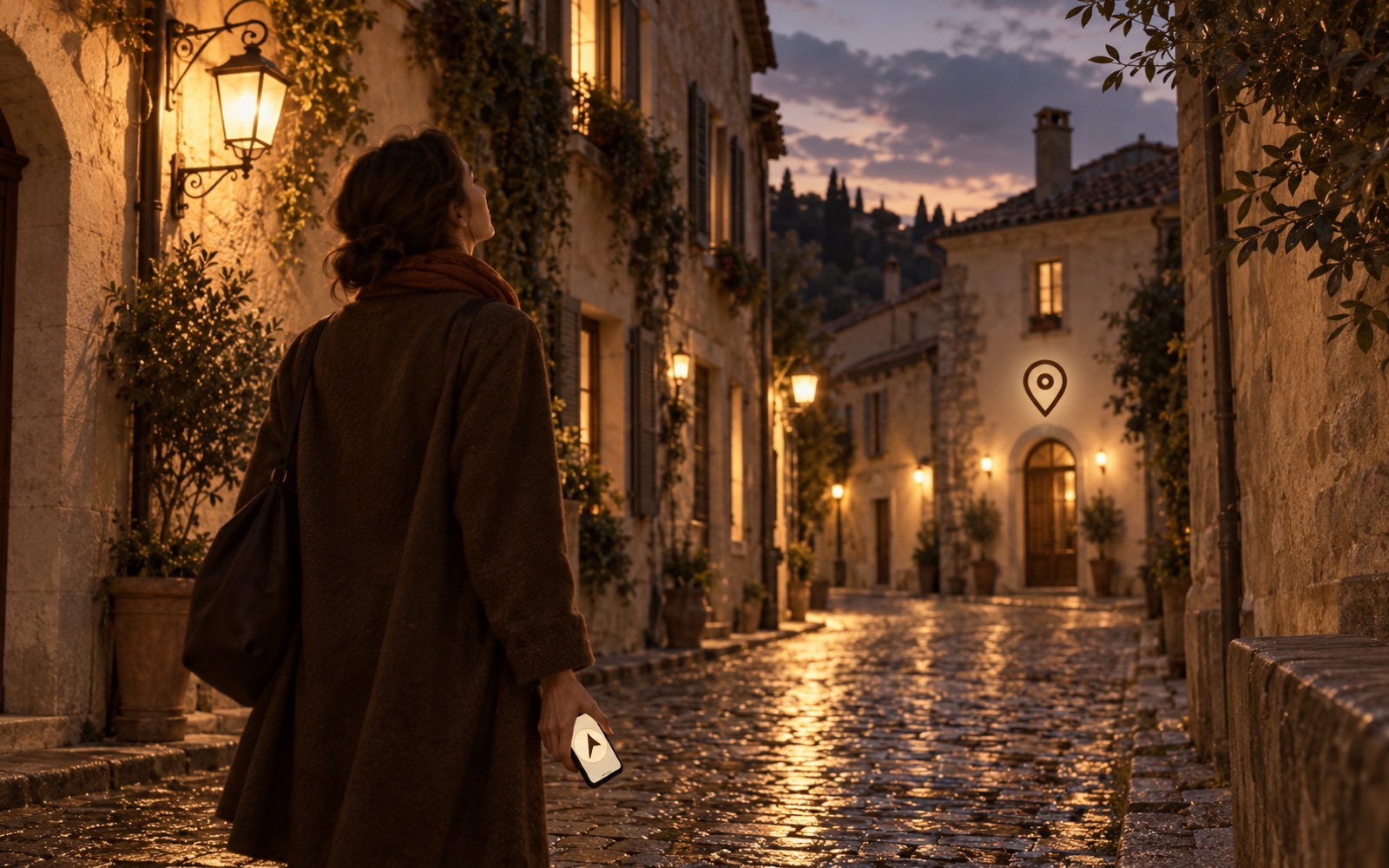
An evening street; someone walks looking up, the phone low in their hand, a Pin above a doorway ahead.

How it stays clean

Nothing stored, nothing tracked

The place you share travels inside the link itself: its coordinates, a name, an icon, a short note. There is no database that knows the place, and none that knows you.

The arrow is calculated on the phone from its own GPS and compass. When you navigate, your position never leaves your device, because there is nowhere for it to go.

You do not have to take anyone's word for it:

  • Open a Tarrow link on a laptop.
  • Open the browser's developer tools and watch the network tab while the arrow works.
  • After the page has loaded, nothing else is sent.

The app is tested the plain way: navigation on, airplane mode on, and the arrow keeps pointing until you reach the car. It stays this way because it is the honest way to build a location tool. A tool that stores where people are is a liability waiting to happen.

THE LINKtarrow.dev/compass?50.11047, 8.68166Römericon: squarenote: the old town hallOPENS ON ANY PHONENO SERVER IN BETWEEN

Money

The product is the product

Much of what looks free online is paid for with attention or data. Tarrow returns to the older model: a tool is built, you buy the tool, you use the tool. The app costs once and is yours. There is no subscription.

Good tools cost money once. They should not need your attention forever.

What stays free, because useful ways of making places findable should be available to everyone:

When a venue prints its codes through one of the linked print services, that service may pay a commission; those links are marked. That is all of it. No advertising, no data, no analytics.

THE USUAL MODELYOUPLATFORMprofileadsanalyticsTARROWYOUTOOLTHE PLACE

What it is not

So that nobody expects the wrong thing

  • Not a map, and not turn-by-turn. It shows direction and straight-line distance. You choose the path.
  • Not a tracker. It cannot show you where someone is, only where a place is.
  • Not a safety device. It helps you find a place you agreed on. It does not watch anyone.
  • Not a company. One person, one laptop, a label printer in the car.
a mapturn-by-turna trackera safety device

Who

One person, and the tools of today

Tarrow is built by one person, in the evenings and at weekends, with no company, no investor and no team behind it: with curiosity, engineering habits, a weakness for geography and a stubbornness about privacy.

Modern tools and artificial intelligence help with the building. The ideas, the design choices and the responsibility stay with a human.

If something is unclear, wrong, or you know a place that should have a code and does not: hello@tarrow.dev. Every mail is read by that one person.

In one breath

We live in a physical world. Places are real.People should be able to point each other to them.The technology for that can be much simpler than we have made it.That is why Tarrow exists.

Tarrow gives you the direction. You choose the path.

Explore the app

Or send someone a place right now, free, without the app.